1. Inspect the link before you trust the offer
The first thing to inspect is where the coupon is actually taking you. A real-looking logo does not matter much if the offer lives on a suspicious page.
A few common red flags:
- The link is not connected to the retailer or a trusted coupon source.
- The page contains strange strings of characters or obvious misspellings.
- The site feels built to capture clicks rather than explain the offer clearly.
That does not mean every coupon has to live on a retailer domain to be legitimate. It does mean the source needs to be credible.
2. Study the formatting
Fake coupons often fall apart visually. Fonts may not match, spacing can look awkward, and parts of the offer may appear pasted in after the fact.
If the coupon looks like it was edited badly, stretched, or patched together from multiple designs, take that seriously. Sloppy formatting does not prove fraud by itself, but it is one of the easiest early warning signs.
3. Treat the barcode like one clue, not the whole answer
A real coupon often includes a barcode or another scannable redemption method, but a barcode alone does not make an offer authentic. Counterfeit coupons can include fake or manipulated barcodes too.
That means the better question is not just whether a barcode exists. It is whether the full coupon makes sense as a legitimate offer from the brand behind it.
4. Verify the expiration date and the timing logic
Expiration dates can reveal a lot. If the coupon has no expiration date at all, or if the date is wildly outdated or implausibly far in the future, that is a reason to slow down.
The same logic applies to event timing. If a holiday weekend coupon is still floating around months later, or if the date clearly does not match the promotion, treat the offer with caution.
5. Never pay money for a coupon
This is one of the easiest rules in the article. If someone is asking you to buy the coupon itself, walk away.
A coupon is supposed to lower the total, not create a new fee before you even shop. If a deal requires payment just to access the discount, that is a strong sign the offer is not legitimate.
6. Be suspicious of outrageous or obviously fabricated terms
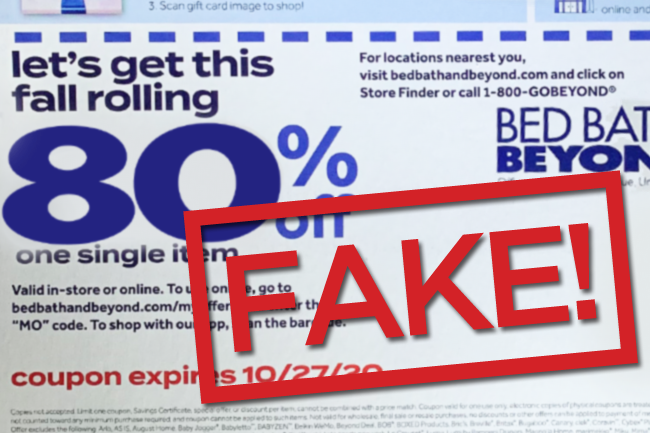
Counterfeit coupons usually give themselves away by promising more than legitimate offers ever would. Huge discounts, vague free-product claims, and offers that skip normal restrictions can all be warning signs.
Authentic manufacturer coupons tend to spell out clear limits, redemption details, and where the coupon should be sent. When an offer sounds sloppy, exaggerated or far more generous than normal, it is smart to treat it with skepticism.
7. Confirm the offer through a trusted source
If something still feels off, do not guess. Verify it through a trusted source.
A few better paths:
- Check the retailer's official site or app.
- Compare the offer to the retailer's normal promotion style.
- Review the Coupon Information Center when counterfeit-coupon concerns are involved.
- Avoid forwarding or redeeming an offer just because it is spreading quickly online.
Bonus Tip: If the discount looks too high to be real, slow down.
A huge discount is not automatically fake, but the more extreme the offer looks, the more carefully it should be reviewed. Counterfeit coupons often rely on urgency and excitement to stop people from thinking clearly.
That is especially true when the deal combines a massive discount with poor formatting, a sketchy link, or a redemption path that does not make sense.



 previous
