
In early 2021, the COVID-19 vaccine represented more than a medical milestone. For many Americans, it looked like the first real path back to ordinary life.
This CouponCabin survey captured that moment. It showed optimism, hesitation, and a clear sense that many people were already thinking past the shot itself and toward what vaccination might allow them to do again.
Most Americans Had Chosen a Side, but a Large Middle Was Still Waiting
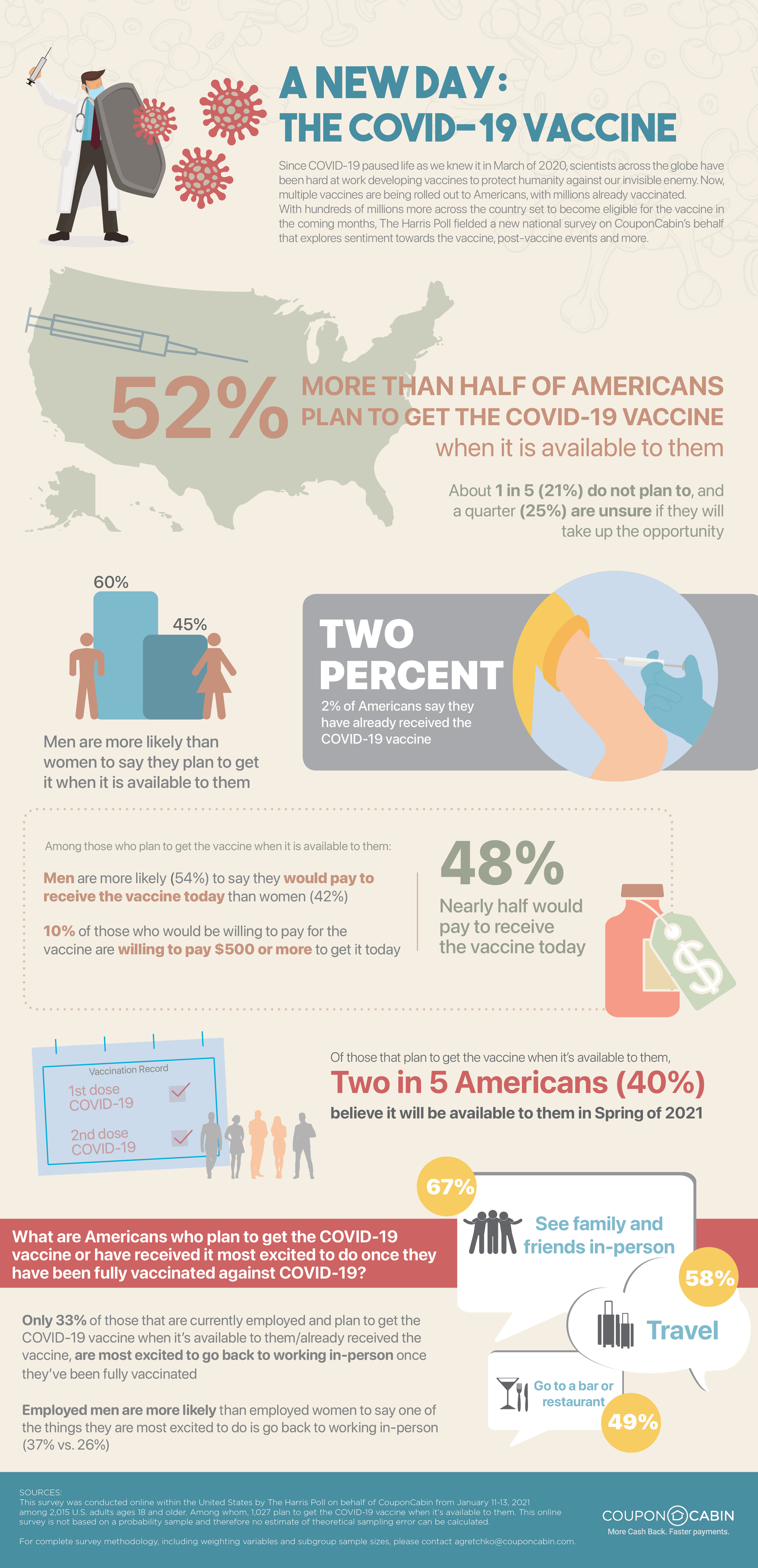
At the time of the survey, 52% of Americans said they planned to get the COVID-19 vaccine when it became available to them. Another 21% said they did not plan to receive it, while 25% were still undecided.
That split mattered because it showed the country was not moving in one direction. Interest was strong, but uncertainty was still a major part of the picture.
Men were more likely than women to say they planned to get vaccinated, with 60% of men saying yes compared with 45% of women. Among those planning to get the vaccine, 40% believed it would be available to them that spring.
Urgency Was Real
Only 2% of Americans said they had already received the vaccine at the time of surveying, which meant most respondents were still waiting.
Among those who planned to get vaccinated, demand was strong enough that nearly half, 48%, said they would pay money to receive the vaccine immediately. A smaller but notable group placed an especially high value on getting access sooner, with 10% of those willing to pay saying they would spend $500 or more.
Men were also more likely than women to say they would pay to get the vaccine right away, 54% versus 42%.
People Were Thinking Beyond the Shot
The strongest emotional signal in the survey was not really about the vaccine itself. It was about what people hoped would come after it.
Among Americans who had received the vaccine or planned to get it, 67% said they were most excited to see family and friends in person again. Travel came next at 58%, followed by going to a bar or restaurant at 49%.
Other post-vaccine priorities included:
- Go shopping in person: 39%
- Attend a live event: 35%
- Host an in-person gathering at home: 31%
- Resume participating in sports or hobbies: 27%
- Return to working in person: 21%
- Go back to in-person learning at school: 14%
Those numbers make the survey more useful as a snapshot of mood than as a simple vaccine poll. Americans were not just weighing a medical decision. They were attaching that decision to reunion, movement, and normal routines that had been interrupted for months.


 previous

